
How Much Does Basement Waterproofing cost in New Jersey? 2026 Homeowner's Guide
- Sallyanne_Klein

- Aug 31
- 7 min read
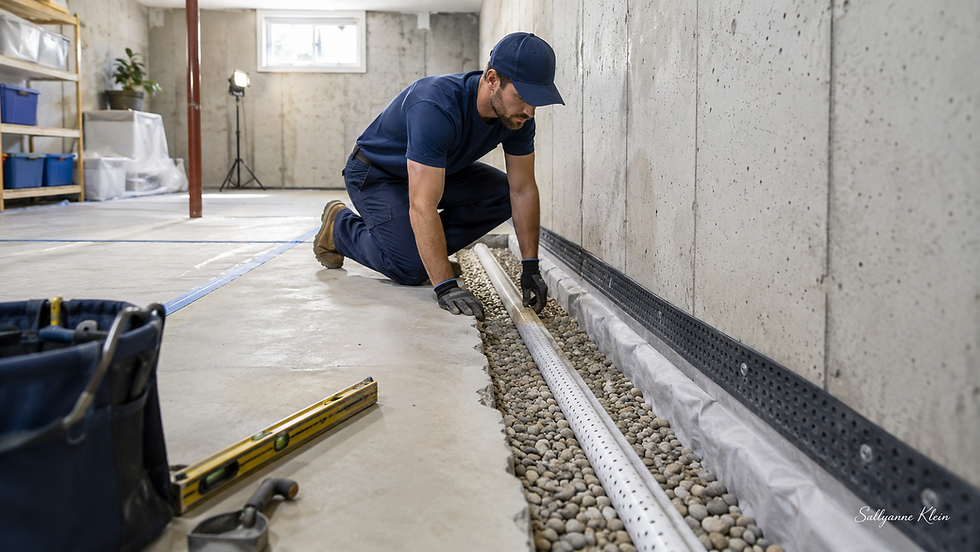
A wet basement rarely has a one-price-fits-all solution. The cost of basement waterproofing in New Jersey depends on where the water is entering, how much of the foundation is affected, the size and condition of the basement, and which drainage or repair system will actually solve the problem. A small leaking crack may need a focused repair, while recurring water along several walls may require an interior drainage system, sump pump, wall protection, or exterior work.
For many New Jersey homeowners, the most useful way to understand price is to look at the scope of work—not just the total at the bottom of an estimate. This guide explains the major cost factors, the differences between common systems, and what to ask before choosing a waterproofing contractor.
Quick answer: A professional basement waterproofing project in New Jersey can range from a localized repair to a multi-component system costing several thousand dollars or more. The only reliable price comes after identifying the water source and measuring the work area.
What Determines Basement Waterproofing Cost in NJ?
Two basements with similar square footage can require very different solutions. The following conditions have the greatest effect on a waterproofing estimate:
The source of the water: Wall crack, cove joint, floor crack, window well, basement entrance, plumbing leak, groundwater, grading or surface drainage.
Linear footage: Interior drainage is normally planned around the number of feet being treated, not simply the home’s square footage.
Foundation type: Poured concrete, concrete block, stone, and mixed foundations require different preparation and repair methods.
Accessibility: Finished walls, bathrooms, cabinets, stairs, utilities, and stored belongings can affect demolition and restoration needs.
Water volume and hydrostatic pressure: Recurring seepage during heavy rain may require a larger drainage and pumping strategy.
Pump configuration: Basin size, primary pump capacity, discharge routing, and battery backup all affect the scope.
Exterior conditions: Excavation depth, soil, patios, decks, utilities, landscaping, and equipment access influence exterior waterproofing costs.
Related repairs: Foundation cracks, deteriorated masonry, damaged framing, or poor grading may require separate work.
Typical Basement Waterproofing Solutions and Their Cost Factors
Interior French Drain or Perimeter Drainage System
An interior drainage system is commonly recommended when groundwater enters where the wall meets the floor, through porous masonry, or across multiple areas of the basement. The installer opens a controlled section of the concrete slab along the affected perimeter, places drainage pipe and washed stone, connects the system to a sump basin, and restores the concrete surface.
The price is influenced by linear footage, slab thickness, foundation conditions, demolition, access, drain configuration, cleanouts, wall drainage material, and the sump system selected. A partial system may cost less initially, but it should only be used when the water pattern and foundation conditions support a limited repair.

Sump Pump and Battery Backup System
The sump pump is the mechanical heart of many interior waterproofing systems. Cost varies according to pump quality, basin design, discharge distance, check valves, electrical requirements, high-water alarms, and whether a secondary battery-backup pump is included.
A battery backup is especially valuable during New Jersey thunderstorms and coastal weather events because power loss can happen when groundwater is rising fastest. The backup should be sized and installed as part of the overall drainage design—not treated as a decorative add-on.

Foundation Crack Repair
A single leaking crack may be repaired from the interior with polyurethane injection when the crack and surrounding foundation are appropriate for that method. Epoxy may be used in certain structural applications, but the correct material depends on whether the goal is water sealing, structural bonding, or both.
Crack-repair pricing depends on the crack’s length, width, accessibility, moisture activity, wall material, and whether exterior excavation or structural evaluation is needed. A crack should never be priced by appearance alone. Horizontal cracks, displacement, bowing, or repeated movement deserve closer evaluation before any cosmetic sealing is performed.

Exterior Foundation Waterproofing
Exterior waterproofing addresses water before it passes through the foundation wall. A complete scope may include excavation, cleaning and repairing the foundation, applying a waterproofing membrane, installing drainage or protection board, replacing or improving the footing drain, adding stone, and carefully backfilling the excavation.
Because exterior work involves excavation and site restoration, it often costs more than a comparable interior system. Depth, soil conditions, utility locations, patios, decks, driveways, landscaping, and machinery access all matter. Exterior waterproofing can be the right solution when the wall itself must be accessed or when exterior conditions are driving the problem, but it is not automatically necessary for every wet basement.

Crawl-Space Waterproofing and Encapsulation
Crawl spaces require a moisture-control plan designed around groundwater, exposed soil, humidity, drainage, foundation vents, and mechanical equipment. Depending on conditions, the project may include perimeter drainage, a sump system, a reinforced vapor barrier, wall sealing, air sealing, and a properly sized dehumidifier.
Encapsulation cost is affected by floor area, wall height, obstacles, debris removal, access, liner thickness, number of piers, and the amount of detail work required around penetrations. A low price may reflect a thin ground cover rather than a fully sealed system.
Interior vs. Exterior Waterproofing: Which Costs More?
Exterior waterproofing generally requires more excavation, labor, material handling, and property restoration. Interior drainage is often less disruptive to the yard and can provide dependable groundwater management when designed correctly. However, cost alone should not determine the method. The right choice depends on how the water is moving, the foundation’s condition, and what parts of the property can be accessed.
Primary purpose: Interior drainage collects and redirects water after it reaches the foundation area. Exterior waterproofing helps stop water before it passes through the wall.
Typical disruption: Interior drainage requires access to the concrete perimeter. Exterior
waterproofing requires excavation and may affect landscaping, patios or exterior structures.
Common cost drivers: Interior costs are affected by linear footage, demolition, pump selection, and discharge work. Exterior costs are affected by excavation depth, soil, access, membrane, drainage, and property restoration.
Best determined by: Interior water patterns, exterior conditions, and a complete foundation inspection.
Why the Cheapest Waterproofing Estimate Can Cost More Later
A low estimate is not automatically a bad estimate, and a high estimate is not automatically better. The important question is whether each proposal includes the same work, materials, and protection. A price that leaves out essential components can create a false comparison.
Before choosing a contractor, confirm whether the estimate includes:
The exact areas and linear footage being treated.
Concrete removal, debris disposal, and concrete restoration.
Drainage pipe, washed stone, wall drainage material, and cleanouts.
The sump basin, pump model or performance class, check valve, and discharge work.
Battery backup, alarm, or secondary pump, if recommended.
Protection for finished areas, utilities, and personal property.
Permits or electrical work when required.
Written warranty terms, exclusions, and transfer conditions.
The work that is specifically excluded from the price.
Are You Comparing Waterproofing Estimates Apples to Apples?
When two totals are far apart, compare the scopes line by line. One contractor may be quoting a full perimeter system with a primary pump, backup pump, wall drainage, and concrete restoration. Another may be quoting only a partial drain and a basic pump. Those are not the same project.
Ask each contractor to explain why the proposed system matches the observed water source. A professional should be able to show where water is entering, where the system will collect it, how it will reach the sump, where it will discharge, and what happens if the power fails.
How to Get an Accurate Basement Waterproofing Estimate
The most accurate estimate begins with an in-person inspection. If possible, document when the water appears, which wall or corner becomes wet first, how long it remains, whether the pump runs, and whether the problem occurs during heavy rain or at other times. Photographs and videos taken during the leak are extremely helpful.
During the inspection, Neptune Waterproofing Services evaluates the visible water pattern, foundation type, drainage conditions, sump setup, discharge route, grading, and related cracks. We then explain the recommended scope so you understand what is being priced and why.
Basement Waterproofing Cost FAQs
How much does it cost to waterproof a basement in New Jersey?
The cost can range from a localized repair to a multi-component system costing several thousand dollars or more. Basement size alone does not determine the price. Water source, linear footage, foundation type, access, pump requirements, and exterior conditions must be evaluated.
Is an interior French drain priced by square foot?
Interior perimeter drainage is commonly measured by linear footage because the work follows the affected foundation walls. Additional components such as demolition, pumps, wall drainage, discharge piping, and electrical work may be priced separately or included in a complete system price.
Does every wet basement need a French drain?
No. A leaking window well, isolated wall crack, plumbing leak, or exterior grading problem may require a different repair. A drainage system is appropriate when inspection and water patterns show that groundwater must be collected and redirected.
Is exterior waterproofing always better than interior waterproofing?
No single method is best for every home. Exterior waterproofing addresses the outside face of the foundation, while interior drainage manages water and hydrostatic pressure from inside. The correct choice depends on the cause, foundation condition, access, and project goals.
Should I add a battery-backup sump pump?
A backup system can provide important protection during a power outage or primary-pump problem. It should be selected based on expected water volume, system design, and the level of protection the homeowner wants.
Can Neptune compare another contractor’s estimate?
Yes. Homeowners may ask Neptune to explain whether proposed scopes appear comparable. The goal is to help you understand differences in drainage coverage, pumps, materials, warranties, and excluded work—not simply compare bottom-line totals.
Schedule a Basement Waterproofing Inspection in New Jersey
If your basement has standing water, damp walls, musty odors, mineral deposits, peeling finishes, recurring sump-pump activity, or water entering after heavy rain, the first step is identifying the source. Neptune Waterproofing Services provides professional inspections and clear, detailed proposals for homeowners throughout Monmouth County and surrounding New Jersey communities.
Request your free estimate today. Neptune will inspect the problem, explain how the water is entering, and recommend a solution designed for your home.


Comments